


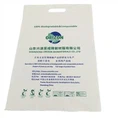


Shandong Orizon Biomaterials Co., Ltd. : Your Professional Biodegradable Food Grade Bag Supplier!
Our company was established in 2009 and is one of the earliest enterprises in China specializing in the research, development and production of biodegradable materials and products. With our deep understanding and rich experience in fully biodegradable materials, we have established a series of efficient and practical production lines that can produce a variety of fully biodegradable film products, such as shopping bags, garbage bags, mailing bags, etc. This product is based on our independently developed fully biodegradable modified resin.
Rich Product Range
We can produce a variety of fully biodegradable film products, such as shopping bags, garbage bags, mailing bags, etc. This product is based on our independently developed fully biodegradable modified resin.
Versatile
Our shopping bags and garbage bags can be widely used for garbage collection, storage and organization of items, gift packaging, etc., and what we produce does not cause any pollution to the environment.
Leading Service
We have many years of industry experience and a complete production management, quality supervision, sales service operation system. Whether you want to buy shopping bags or drawstring bags, just email your requirements and we can customize the product for you.
Quality Guaranteed
All our products have passed EU EN13432, Australian AS4736, American ASTM D6400 and other international standard certifications. And our products are widely exported to Europe, America, Oceania and other countries and regions.

Compostable Fruit And Vegetable Bag
Compostable fruit and vegetable bags are biodegradable alternatives to traditional plastic bags used for packaging produce. They are made from materials that can break down naturally in a composting environment, typically within a few months, into non-toxic components such as water, carbon dioxide, and biomass. These materials include plant starches, cornstarch, sugarcane, paper, and other renewable resources.

Eco Plastic C Fold Produce Bags
EcoPlastic CFold Produce Bags are reusable shopping bags made from a type of plastic known as rPET (recycled polyethylene terephthalate). One of the key advantages of using EcoPlastic CFold Produce Bags is their versatility. They are typically lightweight, yet sturdy enough to hold groceries, including fruits and vegetables.

Bioplastic Cornstarch Fruit Vegetable Retail Bags
Bioplastic Cornstarch Fruit Vegetable Retail Bags are a type of packaging material made primarily from cornstarch, which is a renewable resource. Cornstarch bioplastics are part of a broader category of materials known as bioplastics, which are derived from biomass sources, such as agricultural crops, food waste, or other organic materials, rather than petroleum-based products.

Compostable Vegetables Fruits Packing Bags
Compostable vegetables and fruits packing bags are specifically designed to store and transport fresh produce while providing an environmentally friendly alternative to traditional plastic bags. These bags are made from biodegradable materials that can be broken down into non-toxic components through the composting process.

Food Packaging Transparent PLA Pbat Biodegradable Plastic Produce Roll Bag For Fruit Vegetable
Food Packaging Transparent PLA Pbat Biodegradable Plastic Produce Roll Bag For Fruit Vegetable produce roll bags are a type of packaging commonly used for fruits and vegetables. These bags are made from biodegradable materials that are intended to provide a clear view of the contents while being environmentally friendly.

Biodegradable Fresh Vegetable Packaging Bag
Biodegradable fresh vegetable packaging bags are designed to contain and protect fresh produce while offering an environmentally friendly alternative to conventional plastic packaging. These bags are made from materials that can break down naturally into non-toxic components when exposed to the appropriate environmental conditions, typically in industrial composting facilities.

Compostable Vegetables Fruits Packing Bags in roll

Friendly Vegetables Fruit Biodegradable Shopping Bag Biodegradable Shopping Bags
Compostable Vegetables Fruits Packing Bags in roll

Biodegradable Vest Shopping Bag Customize Vegetables Packing Plastic Bag With Handle
Compostable Vegetables Fruits Packing Bags in roll
What is Biodegradable Food Grade Bag
A biodegradable food grade bag is a type of packaging material specifically designed to store and transport food items in a manner that is safe for consumption and environmentally friendly. These bags are made from materials that have been approved for direct contact with food, meaning they do not contain any toxic substances that could migrate into the food and pose a health risk.
Features of Biodegradable Food Grade Bag
Biodegradability
Biodegradable food-grade bags are made from materials that can break down naturally over time, reducing their environmental impact compared to traditional plastic bags. These materials may include plant-based polymers such as PLA (polylactic acid) or PHA (polyhydroxyalkanoates), which decompose into natural components when exposed to microbial activity.
Moisture Resistance
Biodegradable food-grade bags often feature moisture-resistant properties to protect food items from moisture and humidity, helping to maintain freshness and extend shelf life. Some bags may include moisture-resistant coatings or liners to enhance their performance in humid environments.
Heat Resistance
Biodegradable food-grade bags are heat-resistant, allowing them to withstand high temperatures without deforming or melting. This feature is especially useful for packaging hot food items or for use in foodservice applications where heat sealing is required.
Compostability
Biodegradable food-grade bags are certified as compostable, meaning they can be composted along with organic waste in composting facilities or home compost bins.
Process of Biodegradable Food Grade Bag
Material Selection
The selection of the appropriate biodegradable plastic resin is a critical step in determining the characteristics of garbage bags. In the case of traditional Biodegradable Food Grade Bag, High-density polyethylene (HDPE) is often chosen for its strength and durability, while low-density polyethylene (LDPE) is preferred for its flexibility.
Resin Preparation
To initiate the production process, biodegradable plastic resins in pellet form are carefully chosen and fed into a hopper. The pellets are then transferred into an extruder, which consists of a heated barrel with a rotating screw. Inside the extruder, the pellets are heated, melted, and mixed to form a homogeneous molten mass.
Film Extrusion
The film extrusion process is pivotal in determining the quality and attributes of the extruded plastic film. The core components of a Film Extrusion machine comprise the Hopper, Barrel, Screw, Die, Cooling Mechanism, and Take-Up System.
Bag Forming
The printed Biodegradable Food Grade Bag plastic film passes through a series of rollers and folders, which fold it into a continuous tube with overlapping edges. Heat is applied to seal the edges together, creating a bottom seal for the bags. Simultaneously, the top portion of the tube remains open for later filling.
Printing
The biodegradable plastic film may undergo a printing process to incorporate brand logos, product information, or graphics. Flexographic or rotogravure printing techniques are commonly employed. Flexographic printing uses flexible rubber or photopolymer plates, while rotogravure printing involves engraved cylinders. Ink is transferred onto the film through these plates or cylinders, resulting in high-quality and durable prints.
Cutting and Sealing
In the bag-making machine, the continuous tube of plastic film is fed into a cutting and sealing section. Sharp blades or rotary cutters precisely cut the tube into individual bag lengths, while simultaneously sealing the sides to create the bag shape. Advanced machines incorporate sensors to ensure accurate cutting and sealing.
Handle Attachment
If desired, plastic garbage bags can be equipped with handles to facilitate easy carrying and disposal. Various techniques are employed for handle attachment, such as heat sealing, die-cutting, or attaching pre-made handles. Heat sealing involves applying heat and pressure to affix handles to the bags, while die-cutting creates slots through which handles can be inserted.
How to Choose Biodegradable Food Grade Bag
Material Composition
Look for bags made from materials that are certified biodegradable and compostable. Common materials include polylactic acid (PLA), polyhydroxyalkanoates (PHAs), and compostable blends. Ensure that the material is derived from renewable resources and does not contain any genetically modified organisms (GMOs) if that's a concern for you.
Barrier Properties
Depending on the food product, you may need bags with specific barrier properties to protect against moisture, oxygen, or aroma loss. Some biodegradable materials offer good barriers, while others may not, so choose based on your product's needs.

Strength and Performance
Assess the bag's strength based on its thickness, tensile strength, and tear resistance. The bag should be able to hold the required weight without breaking and resist punctures, especially if it will be used for heavier items or sharp-edged foods.
Printing Inks and Additives
If the bags are printed, ensure that the inks and any additional additives used are also non-toxic and biodegradable. Avoid materials that may contain heavy metals or other harmful substances.
Hemp
Sourced from the cannabis plant, hemp is highly biodegradable, resilient, and versatile. However, hemp is still an expensive source for bioplastics and not yet commercially available in its polymerized form.
Paper
Paper is one of the oldest, traditional forms of compostable packaging. It biodegrades very rapidly and can easily and efficiently be recycled. The downside is that paper does not provide the same protection or sealing as other kinds of packaging, so it's not appropriate for a lot of food packaging.
PLA
PLA is bio-based and can be molded like conventional plastic into packaging, however it's slow-composting, even in an industrial composter.
Cellulose
Plant-based packaging degrades very easily and is a great solution for short-term packaging, but it can't provide shelf-life or proper barrier for food products and easily discolors when stores.
Seaweed
Like cellulose, seaweed-based material is highly biodegradable, and a great for short-term packaging, but unstable and unsuitable for food packaging, transport and storage.
Applications of Biodegradable Food Grade Bag
Bakery and Confectionery Packaging
For goods like bread, cakes, and pastries, biodegradable bags maintain freshness and can be branded with attractive designs to appeal to customers looking for natural and sustainable options.
Snack Food Pouches
Single-use snack food pouches can be made from biodegradable materials, providing a convenient and environmentally friendly option for on-the-go snacking.
Meat and Seafood Packaging
Specialized biodegradable bags are used to package meat and seafood products. These bags help to prevent leaks and cross-contamination while providing an environmentally friendly disposal option.
Certificate


Frequently Asked Questions
Hot Tags: compostable fruit and vegetable bag, China compostable fruit and vegetable bag manufacturers, suppliers, factory, biodegradable bin liners 50l, biodegradable plastic bags made of, biodegradable bags for specific fruits and vegetables, biodegradable bags for keeping fruits fresh, biodegradable bags for seasonal produce for vegetables, biodegradable bags for pick up service of vegetables


