


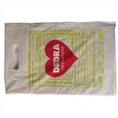

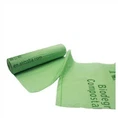
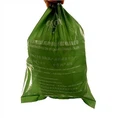
As a supplier of Compostable Garbage Bags, I often encounter questions from customers regarding the environmental friendliness and functionality of our products. One question that has come up frequently is whether compostable garbage bags are biodegradable in saltwater. This blog post aims to explore this topic in depth, providing scientific insights and practical information.
Understanding Compostable and Biodegradable Concepts
Before delving into the question of saltwater biodegradability, it's essential to clarify the terms "compostable" and "biodegradable." Compostable materials are a subset of biodegradable materials. A compostable product can break down into natural elements such as water, carbon dioxide, and biomass within a specific composting environment, typically under aerobic (with oxygen) conditions. Biodegradable materials, on the other hand, can be broken down by natural biological processes over time, but the conditions and time frames can vary widely.
The Composition of Compostable Garbage Bags
Our Compostable Garbage Bags are typically made from plant - based materials such as corn starch, potato starch, or other natural polymers. These materials are chosen because they are renewable resources and have the potential to break down more easily compared to traditional plastic bags made from petroleum - based polymers.
The manufacturing process of these bags involves transforming the raw plant materials into a plastic - like substance through a series of chemical and physical processes. Additives may also be included to enhance the strength, flexibility, and other properties of the bags.
Biodegradation in Different Environments
Composting Conditions
Under ideal composting conditions, which include the right temperature, moisture, oxygen levels, and the presence of microorganisms, our compostable garbage bags can break down within a relatively short period, usually a few months to a year. Composting facilities are designed to optimize these conditions, allowing for efficient decomposition of organic matter, including compostable bags.
Freshwater Environments
In freshwater environments such as rivers, lakes, and ponds, the biodegradation of compostable garbage bags is also possible. Microorganisms in these water bodies can break down the organic components of the bags. However, the rate of degradation can be influenced by factors such as water temperature, nutrient availability, and the presence of specific bacteria and fungi. Generally, biodegradation in freshwater may take longer than in a well - managed composting facility.


Saltwater Environments
When it comes to saltwater environments like oceans and seas, the situation is more complex. Saltwater has a different chemical composition compared to freshwater, with higher salinity levels and a unique set of microorganisms. The high salt concentration can potentially inhibit the growth and activity of some microorganisms that are responsible for biodegradation.
Some studies have shown that the biodegradation of certain plant - based polymers in saltwater can be slower compared to freshwater or composting conditions. The presence of salt can affect the enzymatic activity of microorganisms, reducing their ability to break down the polymers. Additionally, the movement of ocean currents and the dilution of organic matter in the vast expanse of the ocean can also impact the biodegradation process.
However, it's important to note that not all compostable materials are affected equally by saltwater. Some specially formulated compostable polymers are designed to be more resistant to the inhibitory effects of salt and can still break down in saltwater over time. Our research and development team is constantly working on improving the saltwater biodegradability of our compostable garbage bags.
The Importance of Testing
To ensure the reliability and environmental performance of our Compostable Garbage Bags, we conduct extensive testing. We test our bags in various simulated and real - world environments, including saltwater. These tests involve measuring the physical and chemical changes of the bags over time, such as weight loss, strength reduction, and the release of carbon dioxide.
We also collaborate with independent research institutions to validate our findings. By doing so, we can provide our customers with accurate information about the biodegradability of our products in different environments, including saltwater.
Our Product Range
We offer a wide range of compostable garbage bags to meet different customer needs. For those who need bags for garden waste, our Biodegradable Garden Waste Bags are a great choice. These bags are strong enough to hold leaves, twigs, and other garden debris and are designed to break down quickly in a composting environment.
If you prefer bags with a box for more convenient storage and dispensing, our Biodegradable Trash Bags with Box are an excellent option. They are suitable for household waste and can also contribute to a more sustainable waste management system.
For general waste disposal, our Compostable Waste Bags are a versatile solution. They are made from high - quality compostable materials and are available in different sizes to fit various trash cans.
Encouraging Sustainable Waste Management
As a supplier, we are committed to promoting sustainable waste management practices. Compostable garbage bags play an important role in this process. By using our bags, consumers can reduce the amount of non - biodegradable waste going to landfills and contribute to a more circular economy.
We also encourage our customers to properly dispose of their compostable garbage bags. This means separating the bags from non - compostable waste and sending them to appropriate composting facilities whenever possible.
Contact for Procurement
If you are interested in our Compostable Garbage Bags and would like to discuss procurement details, please feel free to reach out to us. We are more than happy to provide you with samples, pricing information, and any other support you may need. Whether you are a small business, a large corporation, or an individual consumer, we can offer customized solutions to meet your specific requirements.
References
- ASTM International. (2020). Standard Specification for Labeling of Plastics Designed to be Aerobically Composted in Municipal or Industrial Facilities. ASTM D6400 - 20.
- European Committee for Standardization. (2019). EN 13432:2000 - Packaging - Requirements for packaging recoverable through composting and biodegradation - Test scheme and evaluation criteria for the final acceptance of packaging.
- Worm, B., et al. (2006). Impacts of Biodiversity Loss on Ocean Ecosystem Services. Science, 314(5800), 787 - 790.