



As a supplier of Compostable Waste Bags, I've always been intrigued by the various environmental conditions that can affect the breakdown of these bags. One question that often arises is whether compostable waste bags break down in acidic conditions. In this blog, I'll delve into the science behind it and share some insights based on our experience in the industry.
Understanding Compostable Waste Bags
Compostable waste bags are designed to be environmentally friendly alternatives to traditional plastic bags. They are made from natural materials such as plant starches, cellulose, and other biodegradable polymers. These materials are chosen because they can be broken down by microorganisms into natural substances like water, carbon dioxide, and biomass under specific composting conditions.


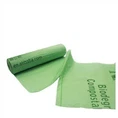
Our company offers a range of compostable waste bags, including Compostable Food Waste Bags, Biodegradable Natural Bin Liner, and Biodegradable Garden Waste Bags. These bags are certified to meet international standards for compostability, ensuring that they will break down within a specified time frame in a composting environment.
The Role of Acidic Conditions in Composting
Acidic conditions can occur in composting systems for various reasons. For example, the decomposition of certain organic materials, such as pine needles or citrus peels, can release acids into the compost pile. Additionally, the presence of acidic soil or water in the composting area can also contribute to an acidic environment.
In general, a slightly acidic to neutral pH (around 6.0 - 7.5) is considered optimal for composting. This pH range provides a favorable environment for the growth and activity of microorganisms that are responsible for breaking down organic matter. However, the ability of compostable waste bags to break down in acidic conditions depends on several factors, including the type of material used in the bags, the degree of acidity, and the presence of other environmental factors.
How Acidic Conditions Affect Compostable Waste Bags
The impact of acidic conditions on compostable waste bags can vary depending on the specific composition of the bags. Some compostable materials are more resistant to acid than others. For example, bags made from polylactic acid (PLA), a common biodegradable polymer derived from corn starch, are relatively stable in acidic environments. PLA has a high resistance to hydrolysis, which means that it is less likely to break down in the presence of acids.
On the other hand, bags made from materials such as cellulose or starch may be more susceptible to acid degradation. These materials can be broken down by enzymes produced by microorganisms, but the activity of these enzymes can be inhibited by acidic conditions. In addition, the acidic environment can cause the cellulose or starch molecules to break down into smaller fragments, which may slow down the overall decomposition process.
The degree of acidity also plays a crucial role in determining the breakdown rate of compostable waste bags. In general, a moderate level of acidity (pH around 5.0 - 6.0) may not have a significant impact on the compostability of the bags. However, if the pH drops below 5.0, the activity of microorganisms can be severely inhibited, and the breakdown of the bags may be significantly delayed.
Other Factors Affecting the Breakdown of Compostable Waste Bags
In addition to acidic conditions, several other factors can affect the breakdown of compostable waste bags in a composting environment. These factors include temperature, moisture, oxygen levels, and the presence of other organic materials.
Temperature is one of the most important factors influencing the composting process. Microorganisms are most active at temperatures between 50°C and 60°C (122°F and 140°F). If the temperature is too low, the activity of microorganisms will slow down, and the breakdown of the bags will be delayed. Conversely, if the temperature is too high, the microorganisms may be killed, and the composting process will stop.
Moisture is also essential for composting. The compost pile should be kept moist but not waterlogged. If the pile is too dry, the microorganisms will not be able to survive, and the breakdown of the bags will be inhibited. On the other hand, if the pile is too wet, the oxygen levels will be reduced, and the composting process will become anaerobic, which can produce unpleasant odors and slow down the decomposition of the bags.
Oxygen levels are another critical factor in composting. Microorganisms need oxygen to carry out their metabolic processes. If the oxygen levels in the compost pile are too low, the microorganisms will switch to anaerobic respiration, which is less efficient and can produce harmful byproducts. To ensure adequate oxygen levels, the compost pile should be turned regularly to allow air to circulate.
Finally, the presence of other organic materials in the compost pile can also affect the breakdown of compostable waste bags. Some organic materials, such as wood chips or sawdust, can take longer to break down than others. If these materials are present in large quantities, they may slow down the overall decomposition process and delay the breakdown of the bags.
Testing the Compostability of Waste Bags in Acidic Conditions
To determine the compostability of our waste bags in acidic conditions, we conduct extensive testing in our laboratory. We simulate different composting environments, including those with varying levels of acidity, and monitor the breakdown of the bags over time.
Our testing results have shown that our compostable waste bags can break down in moderately acidic conditions (pH around 5.0 - 6.0) within the expected time frame. However, in more acidic environments (pH below 5.0), the breakdown process may be delayed. To ensure optimal compostability, we recommend that our customers maintain a slightly acidic to neutral pH in their composting systems.
Conclusion
In conclusion, the ability of compostable waste bags to break down in acidic conditions depends on several factors, including the type of material used in the bags, the degree of acidity, and the presence of other environmental factors. While our compostable waste bags can break down in moderately acidic conditions, it is important to maintain a slightly acidic to neutral pH in the composting system to ensure optimal compostability.
As a supplier of Compostable Waste Bags, we are committed to providing our customers with high-quality products that are environmentally friendly and meet international standards for compostability. If you have any questions about our products or the composting process, please feel free to contact us. We would be happy to assist you in choosing the right compostable waste bags for your needs and providing you with guidance on how to ensure their proper breakdown in your composting system.
If you're interested in purchasing our Compostable Waste Bags, we invite you to contact us for a quote. Our team of experts is ready to discuss your specific requirements and help you find the best solution for your waste management needs. Whether you're a homeowner, a business owner, or a municipality, we have the products and expertise to meet your composting needs.
References
- ASTM International. (2018). Standard Specification for Compostable Plastics. ASTM D6400-18.
- European Committee for Standardization. (2013). EN 13432:2000 + A1:2013 - Packaging - Requirements for packaging recoverable through composting and biodegradation - Test scheme and evaluation criteria for the final acceptance of packaging.
- International Organization for Standardization. (2006). ISO 17088:2008 - Plastics - Specification for compostable plastics.