



Do PLA garbage bags melt in high temperatures?
As a supplier of PLA garbage bags, I often encounter questions from customers regarding the performance of our products under various conditions. One of the most frequently asked questions is whether PLA garbage bags melt in high temperatures. In this blog post, I will delve into the science behind PLA, its melting point, and how our PLA garbage bags perform in high - temperature scenarios.
Understanding PLA
Polylactic acid (PLA) is a biodegradable thermoplastic polyester derived from renewable resources such as corn starch or sugarcane. It has gained significant popularity in recent years due to its eco - friendly nature and potential to replace traditional petroleum - based plastics. PLA is known for its transparency, high strength, and good processability, which makes it an ideal material for manufacturing garbage bags.
The melting point of PLA typically ranges from 130°C to 180°C (266°F to 356°F), depending on its molecular structure and the presence of additives. This is relatively low compared to some other plastics like polyethylene terephthalate (PET), which has a melting point around 250°C (482°F).
Factors Affecting the Melting of PLA Garbage Bags
Several factors can influence whether a PLA garbage bag will melt in high temperatures.


Ambient Temperature
The most obvious factor is the ambient temperature. In normal outdoor conditions, even on a very hot summer day, the temperature rarely exceeds 50°C (122°F). Since this is far below the melting point of PLA, our garbage bags will not melt under typical outdoor heat. However, if the bags are exposed to direct sunlight for an extended period in a confined space, such as inside a hot car trunk, the temperature can rise significantly. But still, it is usually not high enough to reach the melting point of PLA.
Duration of Exposure
The length of time the bags are exposed to high temperatures also matters. Short - term exposure to moderately high temperatures may not cause the bags to melt, but prolonged exposure can lead to softening and potentially deformation. For example, if a PLA garbage bag is left near a heat source like a radiator for hours, it might start to show signs of softening.
Presence of Additives
Some PLA garbage bags may contain additives to improve their performance, such as flexibility or UV resistance. These additives can affect the melting point of the material. At our company, we carefully select additives to ensure that they do not significantly lower the melting point of the PLA and that the bags maintain their integrity under normal use conditions.
Performance of Our PLA Garbage Bags in High - Temperature Situations
We have conducted extensive testing on our PLA garbage bags to evaluate their performance in high - temperature environments. In most common scenarios, our bags show excellent heat resistance.
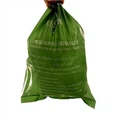
For instance, we placed our [Compostable Garbage Bags](/garbage - bags/compostable - garbage - bags.html) in a simulated hot environment with a temperature of 60°C (140°F) for 24 hours. After the test, the bags remained intact and did not show any signs of melting or significant deformation. The strength and integrity of the bags were still sufficient to hold waste.
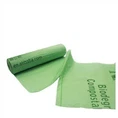
In another test, we exposed our [Garbage Bags On Roll](/garbage - bags/garbage - bags - on - roll.html) to direct sunlight in a closed car trunk on a hot summer day. The temperature inside the trunk reached approximately 70°C (158°F) for several hours. Although the bags became slightly softer to the touch, they did not melt and were still able to perform their function of containing garbage.
Applications and Limitations
Our PLA garbage bags are suitable for a wide range of applications, even in relatively warm conditions. They can be used for general household waste, garden waste, and even in commercial settings. Our [Compostable Garden Waste Bags](/garbage - bags/compostable - garden - waste - bags.html) are especially useful for collecting leaves, grass clippings, and other organic materials, even on warm days.
However, it is important to note the limitations. PLA garbage bags should not be used in direct contact with extremely hot objects. For example, you should not put hot ashes or freshly cooked food directly into the bags. Also, storing the bags in an environment with a consistently high temperature, such as near a furnace or in an unventilated shed during a heatwave, should be avoided.
Conclusion
In conclusion, under normal use conditions, our PLA garbage bags do not melt in high temperatures. The melting point of PLA is well above the temperatures typically encountered in daily life. Through rigorous testing, we have ensured that our products can withstand moderately high temperatures without losing their functionality.
If you are interested in purchasing our high - quality PLA garbage bags, we invite you to contact us for a procurement discussion. We are committed to providing you with the best products and services to meet your waste management needs.
References
- "Biodegradable Polymers: Principles and Applications" by M. Vert, K. Feijen, and R. G. J. Langer.
- Research papers on the thermal properties of polylactic acid from academic journals such as Polymer Degradation and Stability.