



Hey there! As a supplier of eco garbage bags, I often get asked about how to properly dispose of these nifty little helpers. It's a crucial topic, not just for keeping our planet clean but also for getting the most out of these environmentally friendly products. So, let's dive right in and explore the ins and outs of disposing of eco garbage bags correctly.
First off, let's talk about what makes eco garbage bags different from the regular ones. Eco garbage bags, like the ones you can find at Eco Friendly Garbage Bags, are designed with the environment in mind. They're made from materials that are either biodegradable, compostable, or made from recycled content. This means they break down more easily in the environment compared to traditional plastic bags, which can take hundreds of years to decompose.


Biodegradable vs. Compostable Garbage Bags
One of the key things to understand is the difference between biodegradable and compostable garbage bags. Biodegradable bags will break down over time with the help of natural organisms like bacteria and fungi. However, the conditions for this breakdown can vary widely. Some biodegradable bags might only break down in industrial composting facilities, while others can break down in your backyard compost pile.
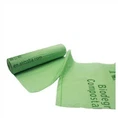
On the other hand, compostable bags are a special type of biodegradable bag that is designed to break down into nutrient-rich compost under specific composting conditions. These bags are often made from plant-based materials like cornstarch or sugarcane. You can find great options for Compostable Bin Liners that meet high standards for compostability.
Proper Disposal of Biodegradable Garbage Bags
If you're using biodegradable garbage bags, the first step is to check the manufacturer's instructions. Some biodegradable bags can be disposed of in your regular trash, but they'll still take some time to break down in a landfill. However, if you have access to an industrial composting facility, that's the ideal place for these bags. Industrial composting facilities have the right temperature, moisture, and oxygen levels to speed up the decomposition process.
To dispose of biodegradable bags in an industrial composting facility, simply place the bag and its contents in the designated compost bin. Make sure the bag is sealed properly to prevent any spills. If you're not sure if your area has an industrial composting facility, you can check with your local waste management department.
Composting Compostable Garbage Bags
Compostable garbage bags are a bit different. They're meant to be composted along with food scraps, yard waste, and other organic materials. If you have a backyard compost pile, you can add compostable bags to it. Just make sure to cut the bags into smaller pieces to speed up the decomposition process.
When adding compostable bags to your compost pile, it's important to maintain the right balance of carbon-rich (browns) and nitrogen-rich (greens) materials. Compostable bags are considered a carbon-rich material, so you'll want to add plenty of nitrogen-rich materials like fruit and vegetable scraps, grass clippings, and coffee grounds. Turn your compost pile regularly to ensure proper aeration and to help the decomposition process along.
Recycling Garbage Bags Made from Recycled Materials
Some eco garbage bags are made from recycled plastic materials. These bags can often be recycled again at the end of their life. Look for bags that are labeled as recyclable and check your local recycling guidelines. In many areas, you can recycle these bags along with other plastic film products like grocery bags and plastic wrap.
To recycle these bags, gather them up and take them to a designated plastic film recycling bin. You can usually find these bins at grocery stores or other retail locations. Make sure the bags are clean and dry before recycling them.
What to Do with Non-Recyclable and Non-Compostable Residue
Even with eco garbage bags, there might be some non-recyclable and non-compostable residue left over. For example, if you've used a compostable bag to collect food scraps but there are some non-compostable items mixed in, like plastic utensils or packaging, you'll need to separate them.
The non-compostable items should be disposed of in your regular trash. Make sure to remove as much of the organic material from these items as possible before throwing them away. This helps to reduce the amount of organic waste going to the landfill.
Tips for Reducing Waste with Eco Garbage Bags
In addition to proper disposal, there are also ways to reduce waste when using eco garbage bags. Here are a few tips:
- Reuse the bags: If the bag is still in good condition after one use, see if you can find another use for it. For example, you can use it to line a smaller trash can or to collect recyclables.
- Buy in bulk: Purchasing eco garbage bags in bulk can reduce packaging waste. You can find great bulk options at Garbage Bags On Roll-Factory.
- Reduce your waste generation: The best way to reduce the need for garbage bags is to generate less waste in the first place. This can include things like buying products with less packaging, composting food scraps at home, and recycling as much as possible.
Conclusion
Properly disposing of eco garbage bags is an important part of being environmentally responsible. By understanding the difference between biodegradable and compostable bags, following the right disposal methods, and taking steps to reduce waste, we can all do our part to keep our planet clean.
If you're interested in purchasing high-quality eco garbage bags for your home or business, I'd love to talk to you. Whether you need compostable bin liners or garbage bags made from recycled materials, we have a wide range of options to meet your needs. Just reach out, and we can start a conversation about how we can help you make more sustainable choices.
References
- Environmental Protection Agency. (n.d.). Composting at Home. Retrieved from [URL of EPA composting at home page]
- National Waste & Recycling Association. (n.d.). Recycling Plastic Film. Retrieved from [URL of NWRA plastic film recycling page]