



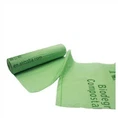

As a supplier of Compostable Bin Liners, I often get asked the question: "How long does it take for compostable bin liners to decompose?" This is a crucial question for both environmentally - conscious consumers and businesses looking to reduce their environmental impact. In this blog, I'll delve into the factors that influence the decomposition time of compostable bin liners and provide a comprehensive answer.
What are Compostable Bin Liners?
Compostable bin liners are designed to break down into natural elements under specific composting conditions. Unlike traditional plastic bin liners, which can take hundreds of years to decompose and often end up in landfills, compostable bin liners offer a more sustainable alternative. These liners are typically made from renewable resources such as plant - based polymers, like polylactic acid (PLA), starch blends, and cellulose.
Factors Affecting Decomposition Time
Composting Environment
The composting environment plays a significant role in determining how long it takes for compostable bin liners to decompose. There are two main types of composting: home composting and industrial composting.
- Home Composting: Home composting systems usually operate at lower temperatures and have less controlled conditions compared to industrial composting facilities. In a home compost pile, the temperature may range from 20 - 60°C. The decomposition process in home composting can be slower due to the limited microbial activity and less consistent environmental conditions. Compostable bin liners in home composting systems can take anywhere from 3 - 12 months to fully decompose. However, this can vary depending on factors such as the size of the liner, the type of composting method used (e.g., aerobic or anaerobic), and the ratio of green to brown materials in the compost pile.
- Industrial Composting: Industrial composting facilities are designed to optimize the decomposition process. They maintain higher temperatures (typically between 55 - 70°C) and have a more controlled environment with proper aeration and moisture levels. In an industrial composting setting, compostable bin liners can decompose much faster, often within 60 - 90 days. The higher temperatures accelerate the microbial activity, which breaks down the organic materials in the liners more rapidly.
Composition of the Bin Liners
The composition of the compostable bin liners also affects their decomposition time. Different materials have different rates of biodegradation.
- Polylactic Acid (PLA): PLA is a common polymer used in compostable bin liners. It is derived from renewable resources such as corn starch or sugarcane. PLA - based bin liners generally have a relatively fast decomposition rate in industrial composting conditions. In a well - managed industrial composting facility, PLA can break down within 60 - 90 days. However, in home composting, the decomposition time can be longer, sometimes up to 12 months, due to the lower temperatures and less optimal microbial activity.
- Starch Blends: Bin liners made from starch blends are also compostable. Starch is a natural polymer that can be easily broken down by microorganisms. The decomposition time of starch - based bin liners can vary depending on the specific blend and the composting conditions. In industrial composting, they may decompose within 60 - 90 days, while in home composting, it can take 3 - 9 months.
- Cellulose: Cellulose is another natural material used in compostable bin liners. It is a major component of plant cell walls. Cellulose - based bin liners are biodegradable and can decompose relatively quickly. In industrial composting, they may break down within 45 - 75 days, and in home composting, it can take 2 - 6 months.
Thickness and Size of the Bin Liners
The thickness and size of the compostable bin liners can also influence their decomposition time. Thicker liners take longer to decompose because there is more material for the microorganisms to break down. Similarly, larger liners have a greater surface area, which may slow down the decomposition process, especially in home composting where the microbial activity is more limited.
Benefits of Using Compostable Bin Liners
Apart from their environmental benefits, compostable bin liners offer several advantages. They are strong and durable, just like traditional plastic bin liners. They can hold a significant amount of waste without tearing, making them suitable for both household and commercial use.
If you are interested in our range of compostable bin liners, we offer Drawstring Garbage Bag, Compost Biodegradable Garbage Bags, and Compostable Bin Liners with Box. These products are made from high - quality, compostable materials and are designed to meet your waste management needs while being environmentally friendly.


Conclusion
In conclusion, the decomposition time of compostable bin liners depends on several factors, including the composting environment, the composition of the liners, and their thickness and size. In industrial composting, these liners can decompose within 45 - 90 days, while in home composting, it can take 2 - 12 months.
If you are a business or an individual looking to make a more sustainable choice in waste management, our compostable bin liners are an excellent option. We are committed to providing high - quality, environmentally friendly products. If you are interested in purchasing our compostable bin liners or have any questions about our products, please feel free to reach out to us for a procurement discussion. We look forward to serving you and helping you contribute to a greener planet.
References
- "Biodegradable and Compostable Plastics" by European Bioplastics.
- "Composting Basics" by the United States Environmental Protection Agency.
- "The Science of Polylactic Acid (PLA) Degradation" in Journal of Polymer Science.